Your Social Media Doesn't Have to Make You Famous. It Has to Make Your Business Easier to Trust.
Social media doesn't always create the first touch. Sometimes it creates the confidence that turns an existing prospect into a customer.
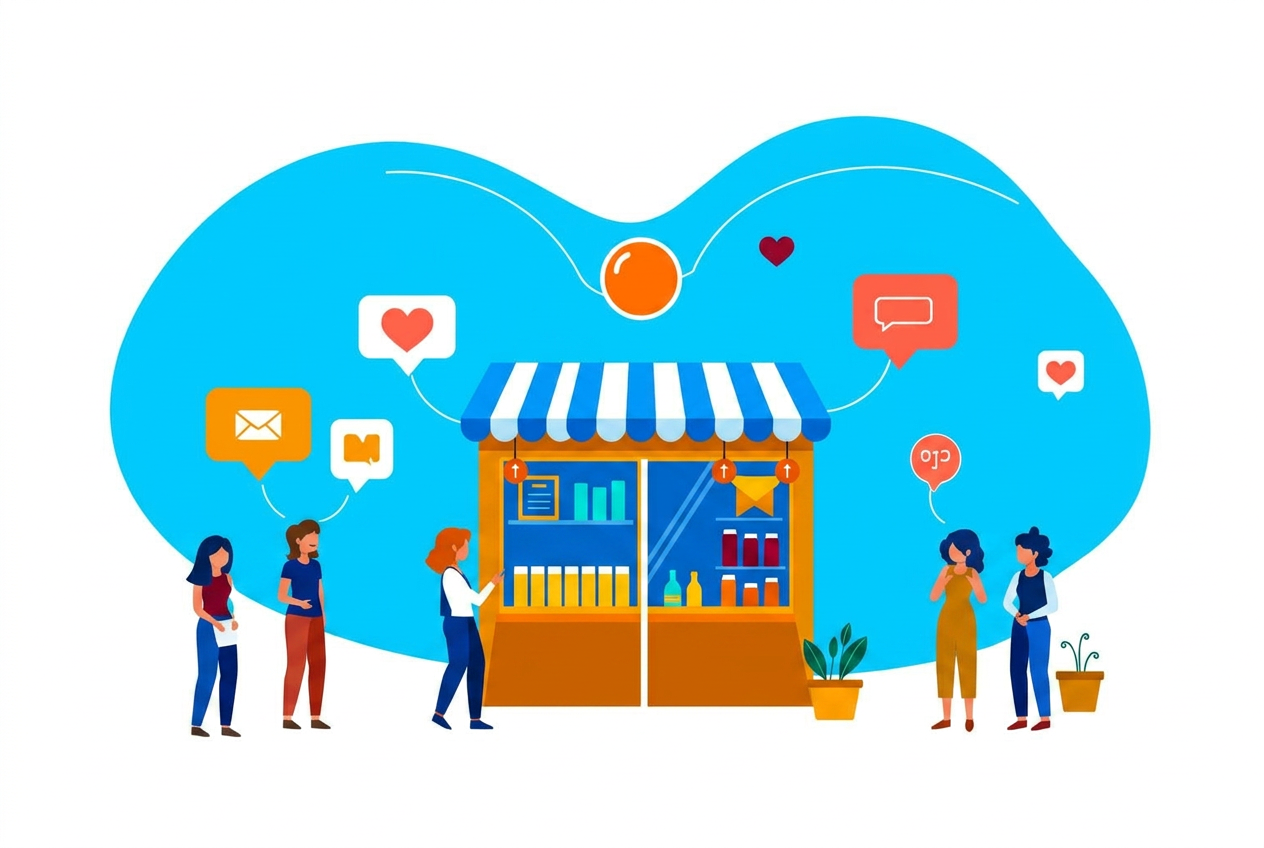
A lot of local business owners look at social media and ask the wrong question:
"How many leads did Facebook generate this month?"
Fair question.
But incomplete.
Because social media doesn't always create the first touch.
Sometimes it creates the confidence that turns an existing prospect into a customer.
A person may discover you through Google.
Read your reviews.
Visit your website.
Then check your Facebook or Instagram page.
What are they looking for?
Usually, evidence.
They want to know whether the business looks real
Your social presence can show things a traditional website often doesn't.
Recent work.
Employees.
Customers.
Projects.
Events.
Community involvement.
Questions and answers.
Behind-the-scenes activity.
The business actually operating.
That's valuable.
A website can say:
"We are a leading local contractor."
Your Facebook page can show six recent projects, customers commenting on the work, employees on job sites, and a community event your company sponsored last weekend.
One is a claim.
The other is evidence.
Social media can reduce uncertainty
Imagine comparing two companies.
Both have good websites.
Both have strong Google reviews.
Business A has an active social presence showing current projects, customer interaction, recent videos, employees, and community activity.
Business B hasn't posted since 2022.
That doesn't automatically make Business A better.
But if you're the customer, which one feels easier to investigate?
That's the role social media often plays.
It creates another layer of reassurance.
Social can also support discovery
Social content doesn't exist in a sealed container anymore.
Google has introduced Search Console reporting that lets businesses and creators understand how content from platforms including Instagram, TikTok, X, and YouTube performs in Google Search and Discover. That means certain social and video content can become part of the search-discovery journey itself.
Social profiles can also be connected to a Google Business Profile on supported platforms. Google currently supports social links including Facebook, Instagram, LinkedIn, Pinterest, TikTok, X, and YouTube.
Don't confuse activity with effectiveness
This doesn't mean posting every day just to prove you're alive.
A steady stream of useless content is still useless.
The better question is:
Does our social presence provide evidence that would help a prospective customer trust us?
Useful examples include:
Completed work
Before-and-after results
Customer stories
Educational tips
Staff introductions
FAQs
Community activity
New services
Product demonstrations
Videos answering common customer questions
That's a much better content strategy than filling Tuesday because the social media calendar had an empty square.
Your minimum viable social presence
A local business doesn't need to become a media company.
At minimum, I'd want:
Accurate profile information
Consistent branding
A working website link
Current contact information
A clear business description
Recent activity
Real examples of the business
Responses to relevant customer interaction
That's enough to make social useful as a trust layer.
Then you can build from there.
The takeaway
Your social media doesn't need to make your business famous.
It needs to make your business easier to believe.
If a prospective customer looks you up after discovering you somewhere else, your social profiles should strengthen their confidence.
Not create another question mark.
A simple next step
Open your primary social profile and pretend you've never heard of the company.
Ask:
"Does this make the business look active, credible, professional, and worth contacting?"
If not, that's where I'd start.